

The 2026 tax year introduces significant changes for UK landlords as Making Tax Digital for Income Tax Self Assessment becomes mandatory for those with qualifying income levels. Understanding these new requirements and associated deadlines is essential to avoid penalties and maintain smooth tax compliance. This article provides clear guidance on MTD criteria, digital record keeping obligations, compliance strategies across different landlord structures, and practical steps to optimise your tax reporting processes for the year ahead.
Table of Contents
- Key Takeaways
- Criteria for MTD compliance and tax deadlines for landlords
- Managing tax reporting and digital record keeping under MTD
- Comparing compliance obligations for different landlord structures
- Best practices and expert tips for meeting 2026 tax deadlines
- Discover free MTD software to simplify your landlord tax reporting
- Frequently asked questions about tax deadlines for landlords in 2026
Key Takeaways
| Point | Details |
|---|---|
| MTD threshold | From 6 April 2026 MTD for Income Tax Self Assessment applies to landlords with gross income from property or self employment exceeding £50,000, based on the 2024-25 year. |
| Registration deadline | Registration must be completed by the start of the 2026 tax year to avoid penalties and ensure HMRC readiness. |
| Company exemption | Limited companies with rental properties are exempt from MTD ITSA requirements as the regime targets sole traders and partnerships. |
| Quarterly updates | Landlords must keep digital records and submit quarterly updates to HMRC, but these updates do not trigger quarterly tax payments. |
| Digital records | Use HMRC compatible software to track rental income, allowable expenses and transactions, including repairs, letting agent fees, mortgage interest as a tax credit, insurance, utilities and council tax. |
Criteria for MTD compliance and tax deadlines for landlords
Determining whether you fall within the scope of MTD for Income Tax Self Assessment requires understanding the income threshold and how HMRC calculates eligibility. From 6 April 2026, MTD becomes mandatory for landlords whose gross income from property or self-employment exceeds £50,000. This threshold is based on your income during the 2024-25 tax year, so reviewing your accounts from that period is essential for planning ahead.
The registration process must be completed by the start of the 2026 tax year to ensure compliance. Missing this deadline could result in penalties and complications with your tax affairs. It's worth noting that limited companies operating rental properties are exempt from MTD ITSA requirements, as these regulations apply specifically to sole traders and partnerships. This distinction is crucial when deciding how to structure your property business.
Key criteria to assess your MTD obligations include:
- Gross income from property rental or self-employment activities exceeding £50,000 in the 2024-25 tax year
- Operating as a sole trader or partnership rather than a limited company structure
- Having multiple income streams that collectively meet the threshold when combined
- Understanding that the £50,000 figure represents gross income before expenses, not net profit
Knowing these deadlines and criteria helps you plan your compliance strategy effectively. Early preparation gives you time to select appropriate free MTD software, organise your financial records, and understand the digital submission requirements. The transition to digital tax administration represents a significant shift in how landlords interact with HMRC, making advance planning essential for smooth implementation.
Pro Tip: Calculate your gross income for 2024-25 now, even if you're close to the threshold. If your income fluctuates near £50,000, it's better to prepare for MTD compliance early than scramble at the last minute.
Managing tax reporting and digital record keeping under MTD
The practical implementation of MTD requires landlords to maintain digital records using HMRC-compatible software and submit regular updates throughout the tax year. Unlike traditional annual self-assessment, MTD requires quarterly digital updates to keep HMRC informed of your income and expenses. However, these updates are informational only and do not trigger quarterly tax payments, which remains a common misconception among landlords preparing for the changes.
Digital record keeping involves tracking all rental income, allowable expenses, and relevant financial transactions through approved software. The system automatically categorises transactions, calculates tax liabilities, and generates the required reports for HMRC submission. This automation significantly reduces the risk of calculation errors and ensures your records remain current throughout the year rather than requiring a rushed compilation at year end.
Allowable expenses that landlords can claim include:
- Property maintenance and repair costs, excluding improvements that add value
- Letting agent fees and property management charges
- Mortgage interest, claimed as a tax credit rather than a direct expense deduction
- Insurance premiums for buildings, contents, and landlord liability cover
- Utility bills, council tax, and service charges if paid by the landlord
- Legal and professional fees related to property letting activities
Using MTD software for landlords helps maximise your deductible expenses by ensuring nothing is overlooked. The software prompts you to categorise expenses correctly and flags potential claims you might otherwise miss. This systematic approach to expense tracking can result in significant tax savings compared to manual record keeping methods.
Digital updates also provide real-time visibility of your tax position throughout the year. Rather than waiting until January to discover your tax liability, you can monitor your obligations continuously and set aside appropriate funds. This predictability helps with cash flow management and eliminates the surprise of large, unexpected tax bills.
Pro Tip: Connect your business bank account to your MTD software using open banking features. This automatically imports transactions, saving hours of manual data entry and reducing the risk of missing deductible expenses.
Comparing compliance obligations for different landlord structures
The structure of your property business fundamentally affects your MTD obligations, reporting requirements, and compliance deadlines. Understanding these differences is essential for selecting the appropriate approach to tax administration and choosing suitable software solutions.
| Business structure | MTD ITSA requirement | Reporting method | Key deadline | Software needs |
|---|---|---|---|---|
| Sole trader landlord | Mandatory if income exceeds £50,000 | Quarterly digital updates plus annual declaration | 6 April 2026 registration | HMRC-compatible MTD software |
| Partnership | Mandatory if partnership income exceeds £50,000 | Quarterly updates from partnership, annual partner declarations | 6 April 2026 registration | Partnership-enabled MTD software |
| Limited company | Exempt from MTD ITSA | Corporation Tax returns via standard process | Standard Corporation Tax deadlines | Standard accounting software |
| Mixed portfolio | Depends on combined qualifying income | Separate reporting for different income types | Varies by structure | Comprehensive software handling multiple sources |
Sole traders and partnerships must comply with MTD ITSA if their combined income from property and self-employment exceeds the £50,000 threshold. This is a critical distinction because limited company landlords are exempt from these specific regulations. Limited companies continue to file Corporation Tax returns through the existing system, which already operates digitally but follows different rules and deadlines.

For partnerships, the compliance obligation falls on the partnership entity to submit quarterly updates, but individual partners still complete their personal self-assessment returns annually. This dual-layer reporting requires coordination between partners and careful record keeping to ensure consistency across submissions.
The choice of business structure affects more than just MTD compliance. Sole traders benefit from simpler administration but face higher personal tax rates on profits. Limited companies offer tax efficiency through corporation tax rates and dividend planning but involve additional costs for accounts preparation and Companies House filings. Partnerships provide flexibility for multiple owners but require clear agreements on profit sharing and responsibilities.
When selecting software for sole traders and partnerships, ensure it supports your specific structure. Partnership software must handle profit allocation between partners, whilst sole trader software focuses on individual income and expense tracking. The right tool makes compliance straightforward regardless of your chosen structure.
Best practices and expert tips for meeting 2026 tax deadlines
Successful compliance with 2026 tax deadlines requires proactive planning, systematic record keeping, and understanding the long-term implications of MTD enrollment. These expert-recommended practices help landlords navigate the transition smoothly and maintain ongoing compliance efficiently.
Register for MTD well before the 6 April 2026 deadline if your income qualifies. Early registration allows time to familiarise yourself with the software, establish your digital record keeping routine, and resolve any technical issues before mandatory compliance begins. Waiting until the last minute creates unnecessary stress and increases the risk of errors during initial submissions.
One crucial consideration is the three-year minimum compliance rule. Once enrolled in MTD, landlords must continue for at least three years even if their income subsequently falls below the £50,000 threshold. This long-term commitment means you cannot opt out simply because you have a lower-income year. Planning for this sustained obligation is essential when assessing the administrative impact on your property business.
Best practice recommendations include:
- Establish a monthly routine for updating your digital records rather than leaving everything until quarterly deadlines
- Reconcile your software records with bank statements regularly to catch discrepancies early
- Keep digital copies of all receipts and invoices using cloud storage or software document management features
- Set calendar reminders for quarterly submission deadlines with adequate lead time for preparation
- Review your expense categorisation periodically to ensure you're claiming all allowable deductions correctly
- Maintain communication with your accountant or tax adviser throughout the year rather than only at year end
Using MTD compliance software that integrates with your bank accounts automates much of the record keeping process. Transactions import automatically, reducing manual data entry and ensuring nothing is missed. The software tracks deadlines, generates required reports, and flags potential issues before they become problems.
"The transition to Making Tax Digital represents the most significant change to tax administration for landlords in decades. Success requires embracing digital tools early and establishing robust record keeping habits from the outset." — Tax compliance specialist
Stay updated with HMRC communications regarding MTD implementation. The government occasionally adjusts deadlines, thresholds, or technical requirements based on feedback from early adopters. Subscribing to HMRC updates and following reputable tax advisory sources ensures you're aware of any changes affecting your compliance obligations.
Pro Tip: Run a practice submission before your first official deadline. Most MTD software allows test submissions to familiarise yourself with the process without affecting your actual tax records. This rehearsal builds confidence and identifies any issues in a low-pressure environment.
Discover free MTD software to simplify your landlord tax reporting
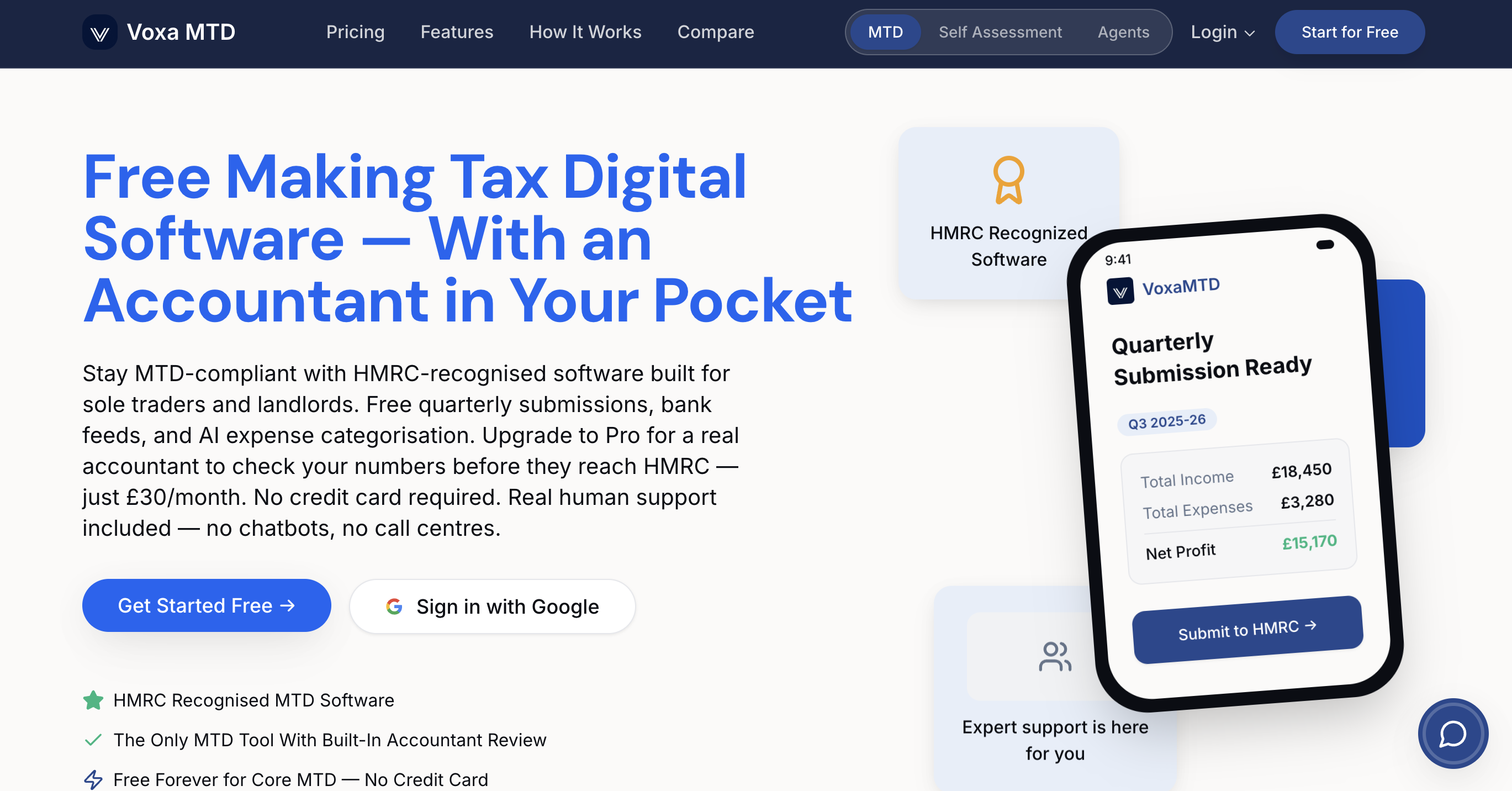
Navigating MTD compliance doesn't require expensive software or complex accounting systems. Free solutions specifically designed for landlords and sole traders make digital tax reporting accessible and straightforward. VoxaMTD free software provides HMRC-recognised tools that handle quarterly updates, expense tracking, and deadline management without subscription fees.
The platform simplifies digital record keeping through automated bank connections, AI-powered expense categorisation, and intuitive interfaces designed for non-accountants. You can track rental income, claim allowable expenses, and submit required updates to HMRC directly through the system. The software also includes accountant review features, allowing professional oversight before finalising submissions for added confidence and accuracy.
Trying a free MTD software tool eliminates the financial barrier to compliance whilst providing professional-grade functionality. The system handles the technical complexity of HMRC integration, leaving you to focus on managing your property business rather than wrestling with tax administration. With 2026 deadlines approaching, exploring no-cost solutions now positions you for smooth compliance when mandatory requirements take effect.
Frequently asked questions about tax deadlines for landlords in 2026
Who must comply with MTD ITSA in 2026?
Landlords operating as sole traders or partnerships with gross income exceeding £50,000 from property or self-employment during the 2024-25 tax year must comply from 6 April 2026. Limited companies are exempt from these specific regulations.
When should landlords register for MTD?
Registration must be completed by the start of the 2026 tax year on 6 April 2026. Early registration is recommended to allow time for software setup, record organisation, and familiarisation with digital submission processes before mandatory compliance begins.
Are limited company landlords affected by MTD ITSA?
No, limited company landlords are not required to follow MTD for Income Tax Self Assessment. These regulations apply specifically to sole traders and partnerships, whilst limited companies continue using existing Corporation Tax reporting procedures.
Do landlords need to make quarterly tax payments under MTD?
No, MTD does not introduce quarterly tax payments for landlords. The quarterly digital updates are informational only, keeping HMRC informed of your income and expenses throughout the year. Actual tax payments follow the existing self-assessment schedule.
What happens if income falls below the threshold after joining MTD?
Landlords must continue MTD compliance for a minimum of three years after enrollment, even if their income subsequently drops below £50,000. You cannot opt out during this period based solely on reduced income levels.