
TL;DR:
- Making Tax Digital aims to modernize UK tax reporting by requiring regular digital updates. It reduces errors, improves real-time visibility, and encourages better financial habits for sole traders and landlords. The phased implementation from 2026 allows gradual compliance, with tools like VoxaMTD simplifying the process.
Most people assume Making Tax Digital is about HMRC wanting more control. It is not. The April 2026 mandate is the result of decades of frustration with a paper-based tax system that lost billions each year to avoidable errors and late filings. For UK sole traders and landlords, this shift is not a bureaucratic inconvenience layered on top of existing obligations. It is a fundamental redesign of how tax works, and understanding the real reasons behind it changes how you should prepare. This article explains the government's genuine motives, what the rules actually require, and how you can use this moment to your advantage.
Table of Contents
- How HMRC is modernising the tax system
- What digital tax means for sole traders and landlords
- The benefits of digital tax compliance for individuals
- Challenges and concerns: addressing the realities
- A fresh view: why digital tax is bigger than software
- How to simplify digital tax compliance with the right tools
- Frequently asked questions
Key Takeaways
| Point | Details |
|---|---|
| Why digital tax matters | Moving to digital tax tackles historical errors and brings greater clarity and speed to managing your tax. |
| What you must do | From April 2026, digital records and quarterly updates are mandatory for many sole traders and landlords. |
| Benefits trump the burden | More accuracy, less stress, and higher productivity are real wins for those who adapt. |
| Support is available | There are simple software options and transition support to help you comply easily. |
How HMRC is modernising the tax system
The old system had a structural problem. Sole traders and landlords filed once a year, often months after the tax year ended, using paper forms or outdated software. By the time HMRC received the information, errors were baked in and impossible to correct without lengthy correspondence. The tax gap, meaning the difference between tax owed and tax actually collected, reached £36 billion annually, with avoidable mistakes accounting for a significant share.
Making Tax Digital (MTD) was designed to fix this at the source. Rather than waiting for a single annual return, the system requires regular digital updates throughout the year. HMRC gains real-time visibility of income and expenses, which means errors are caught early rather than discovered after submission.
"MTD aims to modernise the tax system by shifting from annual paper-based reporting to digital records and quarterly updates, providing real-time visibility of tax liabilities, improving accuracy, saving time on year-end returns, and boosting productivity."
The strategic aims go beyond government convenience. The core goals include:
- Reducing the tax gap by catching errors before they compound
- Giving taxpayers a clearer picture of what they owe throughout the year
- Cutting the administrative burden of year-end returns by spreading the workload
- Encouraging digital adoption across small businesses and landlords
- Improving HMRC's responsiveness by working with live data rather than historical records
For a fuller picture of what this means in practice, MTD for Income Tax explained covers the key mechanics in plain language. If you want to understand the broader context of how the UK tax system is changing, the UK tax digitisation guide is a useful companion.
The shift is not sudden. MTD for VAT launched in 2019, and the lessons from that rollout directly shaped how HMRC designed the income tax version. The government has had years to refine the approach, and the 2026 version is considerably more considered than the original proposals.
What digital tax means for sole traders and landlords
Understanding the requirement in concrete terms removes a lot of the anxiety. Here is what HMRC actually expects from April 2026 onwards.
The rollout is phased by income level:
| Phase | Start date | Income threshold |
|---|---|---|
| Phase 1 | April 2026 | £50,000 or more |
| Phase 2 | April 2027 | £30,000 or more |
| Phase 3 | April 2028 | £20,000 or more |
If your total qualifying income from self-employment or property is above the relevant threshold, you must comply from the corresponding date. The phased rollout gives lower-income sole traders and landlords more time to prepare.
The compliance process works in four steps:
- Keep digital records of all income and expenses using compatible software with what HMRC calls "digital links," meaning data flows electronically without manual re-keying between systems.
- Submit quarterly updates summarising your cumulative income and expenses. Deadlines fall on the 7th of the month following each quarter end, so the first quarter (6 April to 5 July) is due by 7 August.
- File a Final Declaration at the end of the tax year, replacing the traditional Self Assessment return. This is submitted digitally and confirms your total income for the year.
- Maintain digital links throughout, ensuring no breaks in the electronic chain between your records and HMRC.
For MTD terms explained in plain English, including what "digital links" and "bridging software" actually mean, that resource covers the vocabulary you will encounter. The MTD mandate details confirm these requirements directly from HMRC.
If you have multiple income sources, such as both self-employment and rental income, you report each separately within the same submissions. The system is designed to handle this without requiring separate filings.
The benefits of digital tax compliance for individuals
Scepticism about MTD is understandable. Any new requirement feels like extra work at first. But the evidence from the MTD VAT rollout tells a different story once people are through the initial adjustment.
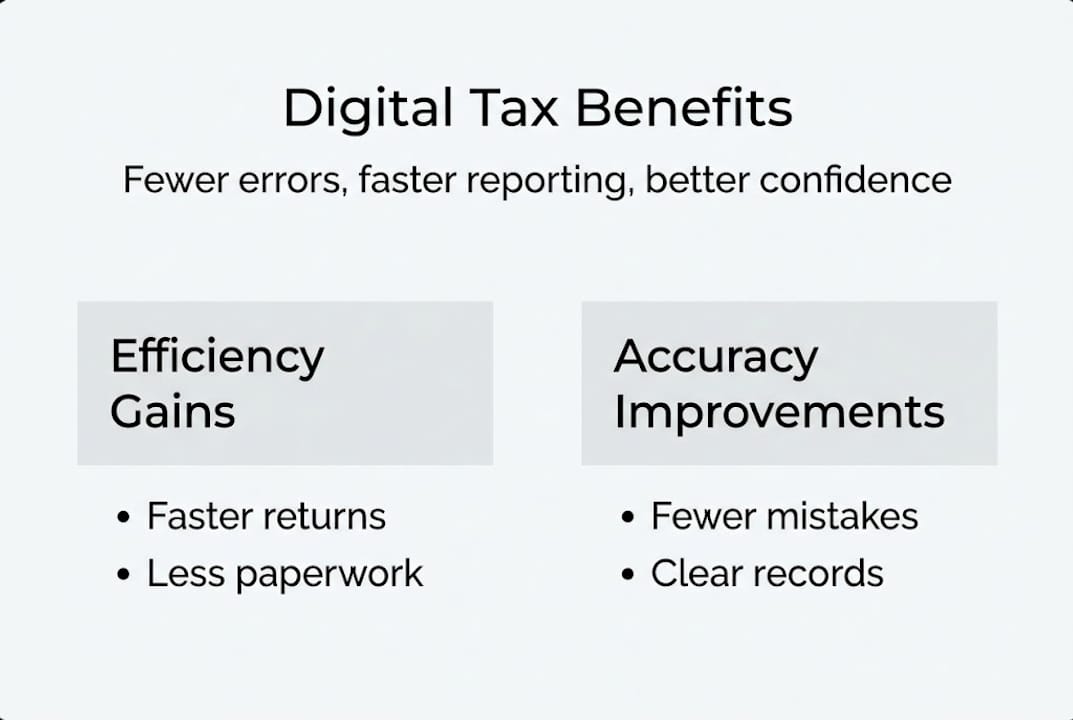
MTD VAT data shows that 67% of users reported fewer record-keeping errors, faster returns, and greater confidence in their figures. That is not a marginal improvement. It reflects a genuine shift in how people relate to their finances when the records are kept digitally throughout the year.

| Approach | Year-end stress | Accuracy | Real-time tax visibility |
|---|---|---|---|
| Paper-based annual filing | High | Lower | None |
| Digital quarterly updates | Spread evenly | Higher | Continuous |
The practical advantages for sole traders and landlords include:
- No year-end scramble to locate receipts and reconstruct months of transactions
- Real-time tax estimates so you can set aside the right amount each quarter
- Fewer penalties from errors that would previously have gone unnoticed until filing
- Faster resolution if HMRC queries something, because your records are already organised
Pro Tip: Set a recurring reminder a week before each quarterly deadline. Reviewing your records monthly means the quarterly update takes minutes rather than hours.
The productivity argument is also real. Businesses that adopt digital record-keeping tend to have better visibility of cash flow, not just tax. That is a side benefit that has nothing to do with HMRC and everything to do with running a tighter operation. For practical tax tips for MTD and how to use MTD software options effectively, those resources offer a useful starting point.
Challenges and concerns: addressing the realities
It would be dishonest to present digital tax compliance as entirely straightforward. There are genuine challenges, and they deserve a clear-eyed response.
The concerns most commonly raised by sole traders and landlords include:
- Software costs for those who have never used accounting tools before
- The learning curve of adopting new digital habits, particularly for older taxpayers
- The impact on small landlords with modest rental income who may feel the administrative burden outweighs the benefit
- Complexity for those with multiple income sources, where the reporting nuances can feel overwhelming
HMRC has acknowledged these concerns and made significant simplifications to the 2026 version of MTD. The End of Period Statement (EOPS), which was a separate filing requirement in earlier proposals, has been removed. Quarterly updates are now cumulative, meaning you report totals to date rather than just the three-month period, which reduces the risk of errors compounding.
"HMRC emphasises benefits including accuracy and time savings; simplifications such as cumulative updates and removal of EOPS have been added in response to feedback from practitioners and taxpayers."
On the question of cost, compatible spreadsheets are permitted provided they are digitally linked via bridging software. This means you do not necessarily need expensive accounting software to comply. Free and low-cost options exist, including HMRC-recognised platforms.
Pro Tip: If you are a landlord with straightforward rental income, check whether a free HMRC-recognised platform covers your needs before committing to paid software.
For landlords specifically, challenges for landlords covers the particular reporting nuances around property income, and the landlord digital submission guide walks through the practical steps in detail.
A fresh view: why digital tax is bigger than software
Most guides treat MTD as a software selection problem. Pick the right tool, tick the compliance box, move on. That framing misses the bigger shift entirely.
Digital tax is a culture change for small businesses and landlords. The people who will benefit most from this transition are not those who find the cheapest compliant software. They are the ones who use the quarterly rhythm as a reason to actually understand their finances, perhaps for the first time. When you know your tax position in real time, you make better decisions. You price your services more accurately. You plan for payments on account without being caught off guard.
The digital tax lingo demystified resource is a good starting point, but the mindset shift matters more than the vocabulary. The sole traders and landlords who treat April 2026 as an opportunity to build stronger financial habits will be in a fundamentally better position than those who treat it as a compliance chore. The mandate is not going away. The question is whether you use it or merely survive it.
How to simplify digital tax compliance with the right tools
If you have read this far, you understand what is required and why it matters. The next step is finding a platform that handles the technical side without adding cost or complexity.
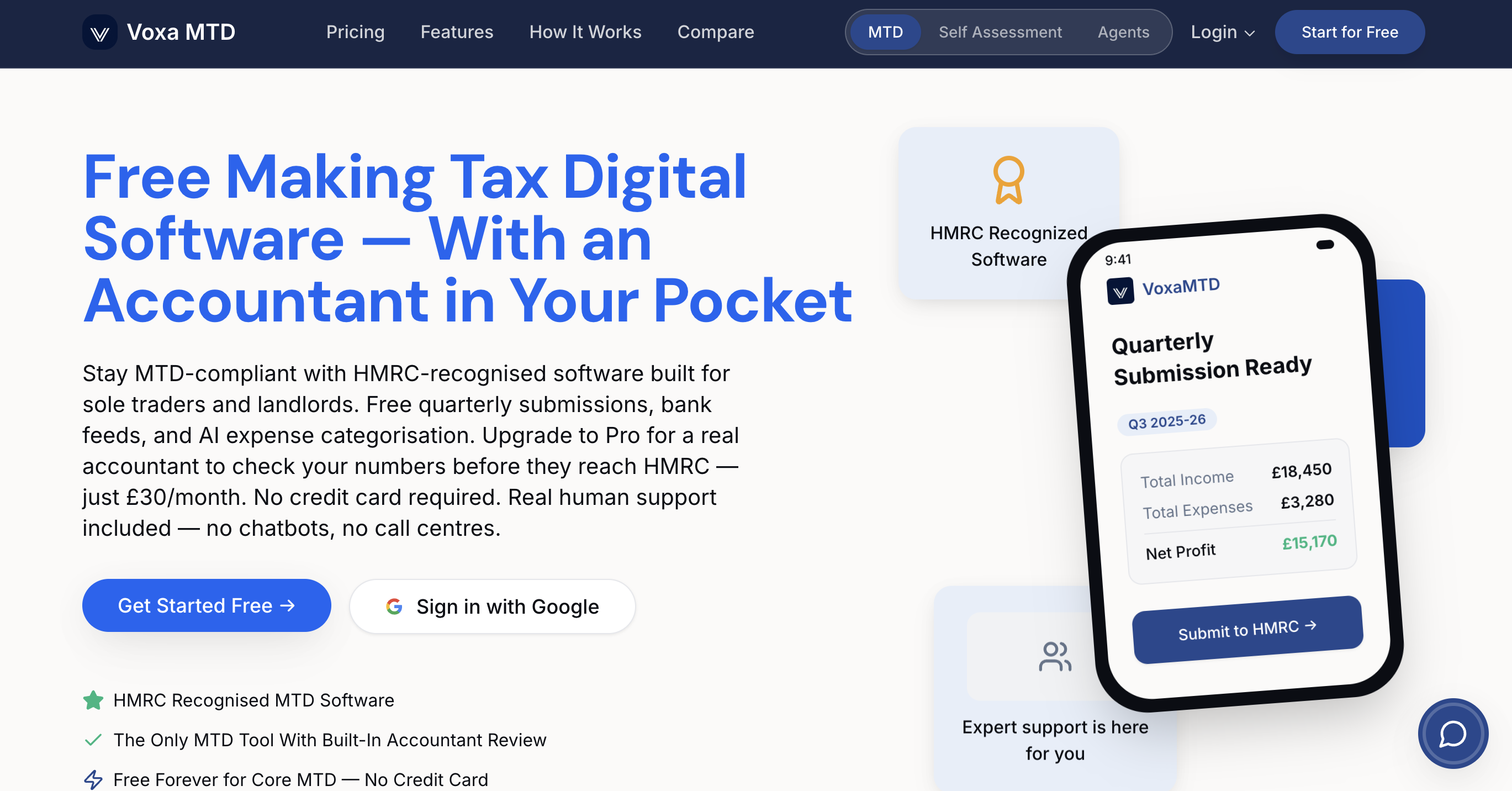
VoxaMTD is a free, HMRC-recognised Making Tax Digital platform built specifically for UK sole traders and landlords. It handles quarterly submissions directly to HMRC via production API, with FCA-regulated open banking through Finexer and AI-powered categorisation at 95% accuracy. Landlords get a dedicated dashboard with Section 24 calculations and capital allowances tracking. Sole traders get mileage tracking, home office calculators, and payments on account projections. If you want human support, the Professional tier adds a dedicated accountant for £30 a month. Explore free MTD software for landlords or see how accountant MTD solutions can support your practice.
Frequently asked questions
Who must use digital tax software from April 2026?
Sole traders and landlords with total qualifying income over £50,000 must keep digital records and file using compatible software from April 2026, with lower thresholds following in 2027 and 2028.
Can I use spreadsheets to comply with HMRC digital tax requirements?
Yes, provided your spreadsheets are digitally linked via bridging software that transmits your quarterly and final submissions to HMRC electronically.
What happens if I miss a quarterly update deadline?
Missing a quarterly deadline may result in penalties, but HMRC has confirmed a soft landing period with flexible penalties and additional support during the transition.
Will the rules change for partnerships or limited companies?
No. The current digital tax mandate applies only to individuals with self-employment or property income. Partnerships and limited companies are not included in the current rollout.
How does digital tax reduce mistakes in returns?
Digital records remove manual re-keying errors, and 67% of MTD VAT users reported fewer mistakes and faster returns after switching to digital record-keeping.